
Healthcare Digitization: When Your Medical Records PDF Is More Fragile Than You
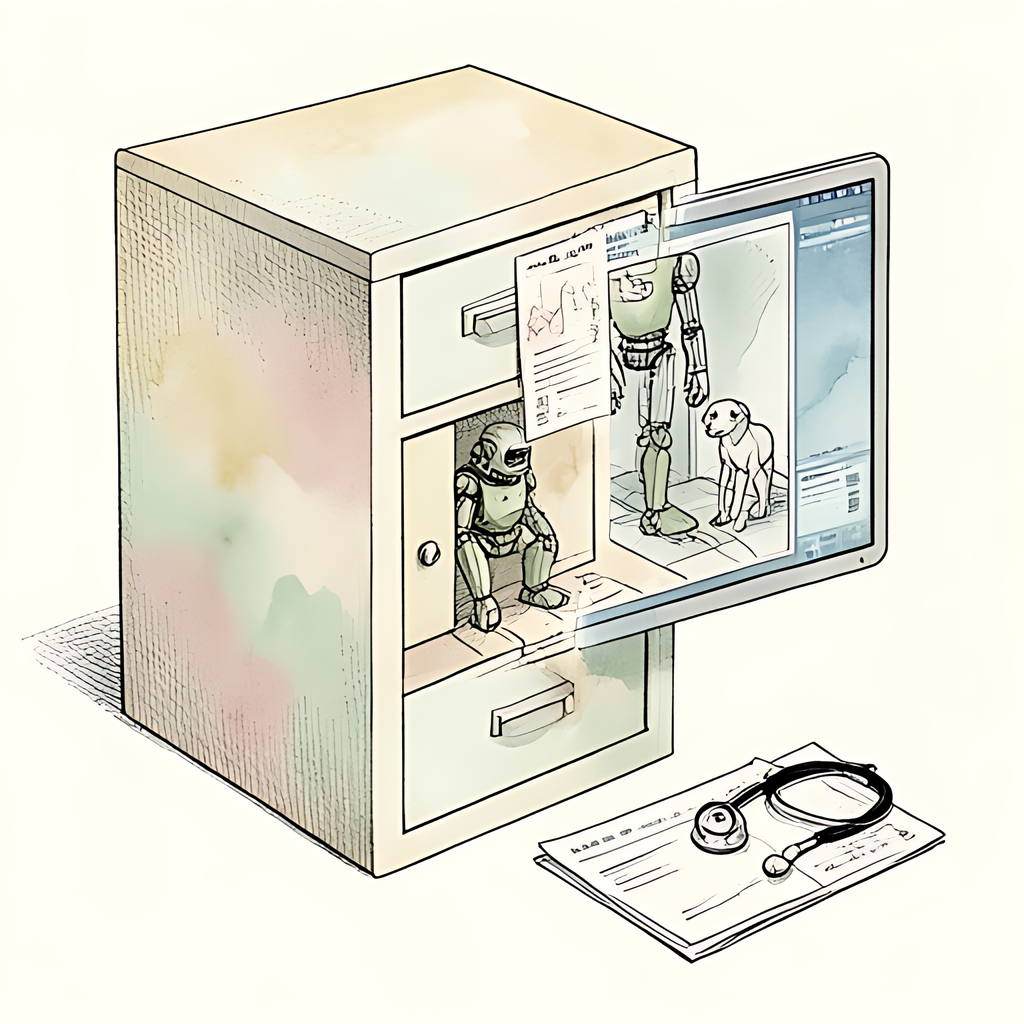
Your medical records are now digital. Congratulations - you've joined the 21st century alongside approximately 92% of U.S. healthcare providers who've ditched paper files. But here's the uncomfortable truth: that PDF sitting in your patient portal might be just as fragile as the folder it replaced, except now it can corrupt silently and vanish without a trace. Welcome to the messy reality of healthcare digitization, where PDFs are both salvation and Pandora's box.
The Scan-and-Hope Strategy: When Quality Control Takes a Sick Day
Let's start with the obvious culprit: the actual scanning process. Healthcare organizations digitized millions of pages of legacy records in what can only be described as an industrial sprint. When you're converting decades of archived documents at scale, quality control often becomes a checkbox rather than a principle.
The result? A staggering proportion of scanned medical PDFs suffer from readability issues - faded text, skewed angles, or pages so compressed they'd make a radiologist squint. Studies suggest that approximately 15-20% of digitized healthcare documents contain significant quality degradation that impacts clinical usability. When that document contains medication dosages or allergy information, a blurry PDF isn't just inconvenient - it's risky.
The irony is thick: organizations invested heavily in digital infrastructure to improve patient safety, yet many ended up with digital versions that are harder to read than the originals. It's like upgrading to a fancy new filing system only to realize you've filed everything upside down.
OCR Nightmares: When Medical Terminology Meets Artificial Confusion
Enter OCR (Optical Character Recognition) - the technology that converts image-based PDFs into searchable text. Theoretically brilliant. Practically? A minefield.
Medical terminology is already notoriously complex. Now add handwriting recognition, specialty abbreviations, and the fact that many scanning vendors use generic OCR engines never trained on medical language, and you've created a perfect storm for errors. That "Lisinopril" prescription? The OCR engine sees "Lisinopnl." The patient's "Crohn's disease" becomes "Crown's disease." These aren't amusing typos - they're potential safety hazards buried in searchable text that looks authoritative but isn't.
Healthcare organizations have discovered this the hard way. A government healthcare agency found that OCR error rates in medical document batches could reach 8-12% for specialized terminology, yet many systems flagged these documents as "complete" and "verified" without human review. The assumption of accuracy built into digital workflows can be more dangerous than the original paper chaos.
The Archival Apocalypse: Your Medical History Vs. Technology Obsolescence
Here's a question that keeps compliance officers awake: will the PDF your organization creates today still be readable in 2050?
PDFs were designed as snapshots, not archival vessels. They depend on software that must evolve with technology, and they can degrade unpredictably when moved between systems, compressed repeatedly, or stored across multiple server migrations. Healthcare organizations face retention requirements spanning decades - yet many PDFs created just 10-15 years ago are already becoming difficult to open reliably with modern systems.
Add to this the interoperability nightmare: different healthcare systems use incompatible PDF formats, embedded proprietary metadata, and encryption methods that don't communicate across platforms. A patient's complete medical history often exists as a fragmented collection of PDFs that can't talk to each other, siloed in different provider networks. You've digitized records, yes - but you've also created new barriers to unified care.
The healthcare industry needs a reality check: digitization isn't modernization when it merely translates legacy chaos into digital chaos with fancier problems.
Moving Forward: Small Steps Toward Smarter Digitization
What can be done? Healthcare organizations should prioritize:
- Quality assurance in scanning: Implement human review for critical documents, not just automated flagging
- OCR validation: Use medical-specific language models for recognition, followed by verification
- Standardized formats: Establish interoperability standards that actually get enforced across provider networks
- Archival strategies: Move beyond simple PDF storage toward formats designed for long-term preservation
The digitization of healthcare records was necessary and inevitable. But treating PDFs as a permanent solution rather than a transitional technology has created technical debt that patients and providers are still paying off. Medical records deserve better than digital band-aids and OCR roulette.
If your organization is wrestling with medical record quality during digitization, practical tools can help optimize the workflow. For instance, when working with scanned images of medical documents that need PDF conversion, having reliable, privacy-preserving conversion tools is essential. PDFb2.io offers a browser-based image-to-PDF tool that keeps sensitive healthcare data on your device - never uploaded to any server - making it safer for converting high-quality scans into searchable PDFs without compromising patient privacy.
Disclaimer: This article is for informational purposes only and does not constitute legal, professional, or compliance advice. Always consult qualified professionals for specific guidance.
Ready to Try PDFb2?
Process your PDFs privately in your browser — 2 free downloads per day, no account needed. Your files never leave your device.
Try PDF Tools Free